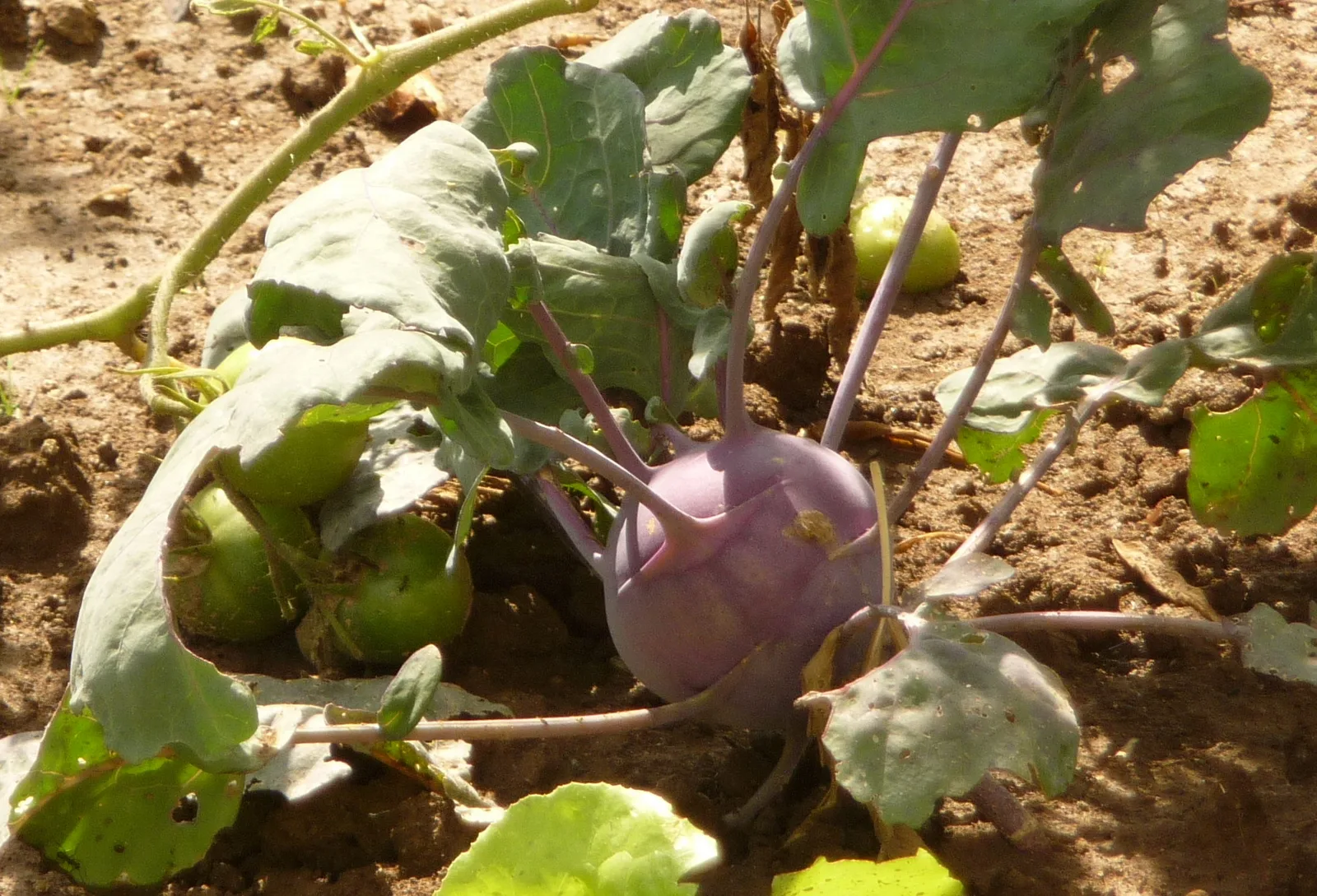
Kohlrabi
Brassica oleracea var. gongylodes
Family: Brassicaceae
Kohlrabi grows in full sun and prefers fertile, well-drained soil with organic matter. Water needs: Moderate; keep evenly moist without waterlogging.
Photo Gallery
Plant reference images showing growth stages and identifying features.
Photo info
Photo info
Photo info
How to Grow Kohlrabi
Kohlrabi growing information includes sunlight requirements of Full sun, soil conditions listed as Fertile, well-drained soil with organic matter with a soil pH of 6.0-7.0, and Moderate; keep evenly moist without waterlogging water needs. The listed hardiness zones are 2-11 as an annual crop. For propagation reference, the database lists germination or establishment information for Kohlrabi as Usually 3-10 days under suitable conditions, with planting or establishment depth listed as Sow about 1/4-1/2 inch deep. Days to maturity are listed as Variety-dependent: early varieties may list 35-45 days to harvest, while giant types can take about two months. Check whether seed packet timing begins at sowing or transplanting.
Plant Overview
Kohlrabi (Brassica oleracea var. gongylodes) is listed in the Brassicaceae family and categorized as a vegetable with a biennial commonly grown as an annual crop life cycle. This profile summarizes growing information for hardiness, light, soil, water, seed starting, maturity, and other available cultivation details. Difficulty is listed as Easy.
- Plant ID
- PLT-0047
- Family
- Brassicaceae
- Plant type
- Vegetable
- Life cycle
- Biennial commonly grown as an annual crop
- Alternate names
- German turnip, turnip cabbage, knol-kohl
- Growth habit
- Compact cool-season vegetable with a rounded, swollen above-ground stem bearing stalked leaves; overwintered plants produce taller flowering stems
- Mature height
- Standard compact varieties commonly reach about 9-12 inches during the edible harvest stage; larger varieties and flowering plants can grow taller
- Mature spread
- About 9-12 inches for standard compact varieties; allow more room for giant varieties and seed-producing plants
- Difficulty
- Easy
Growing Conditions
Kohlrabi is listed for full sun conditions. Water needs are listed as moderate; keep evenly moist without waterlogging. The database soil reference is Fertile, well-drained soil with organic matter. The listed soil pH range is 6.0-7.0, and the listed hardiness range is 2-11 as an annual crop.
- Hardiness zones
- 2-11 as an annual crop
- Sunlight
- Full sun
- Soil
- Fertile, well-drained soil with organic matter
- Soil pH
- 6.0-7.0
- Water needs
- Moderate; keep evenly moist without waterlogging
- Plant spacing
- Space standard varieties about 6 inches apart in rows 12 inches apart; follow variety-specific spacing for larger types
Seed & Germination
For seed starting, the listed germination time is Usually 3-10 days under suitable conditions and the seed depth is Sow about 1/4-1/2 inch deep. The listed time to maturity is Variety-dependent: early varieties may list 35-45 days to harvest, while giant types can take about two months. Check whether seed packet timing begins at sowing or transplanting. Use these values as general reference points and adjust for local climate, seed source, and growing conditions.
- Germination
- Usually 3-10 days under suitable conditions
- Germination temperature
- Seeds can be started indoors without a heating mat; room temperatures around 60-70 F are suitable for raising seedlings
- Seed depth
- Sow about 1/4-1/2 inch deep
- Sowing method
- Direct sow or use young transplants during the cool growing season; avoid scheduling stem development for hot weather
- Start indoors
- Allow about 5-6 weeks to grow transplants with 4-6 developed leaves
- Transplanting
- Set out seedlings with 4-6 developed leaves and a healthy root system; protect young plants from hard frost
Harvest & Propagation
- Days to maturity
- Variety-dependent: early varieties may list 35-45 days to harvest, while giant types can take about two months. Check whether seed packet timing begins at sowing or transplanting
- Harvest
- Harvest standard varieties when the swollen above-ground stem is about 2-3 inches across, before it becomes woody. Follow the seed supplier harvest size for giant varieties; young leaves are also edible
- Propagation
- Propagated by seed, either directly sown or raised as transplants
- Seed saving
- Overwinter healthy plants with roots and growing points intact to allow flowering in the second season. Isolate from other flowering Brassica oleracea crops. For long-term variety maintenance, save seed from 20-50 plants. Collect dry brown pods before they split, then thresh and clean the seed; store fully dried seed in a cool, dry place.
- Pollination
- Insect-pollinated and generally self-incompatible; grow multiple compatible flowering plants for seed. Can cross with other Brassica oleracea crops, including cabbage, broccoli, cauliflower, kale, and Brussels sprouts
Garden Information
- Common pests
- Aphids, cabbage loopers, cutworms, flea beetles, and cabbage worms
- Common diseases
- Downy mildew and bacterial rots can affect kohlrabi
- Uses
- Peeled swollen stems eaten raw in salads or slaws, or cooked in soups, roasted dishes, and fritters; young leaves can be cooked as greens
Related Plants
Find, buy, swap, or sell Kohlrabi
One World One Seed connects this plant profile to community sellers, plant swaps, storefronts, and participating garden retailers.
Growing Reference Note
Plant performance can vary with climate, soil, weather, cultivar, seed quality, and gardening methods. The values on this page are general database reference ranges rather than a substitute for local extension guidance or seed-packet instructions.