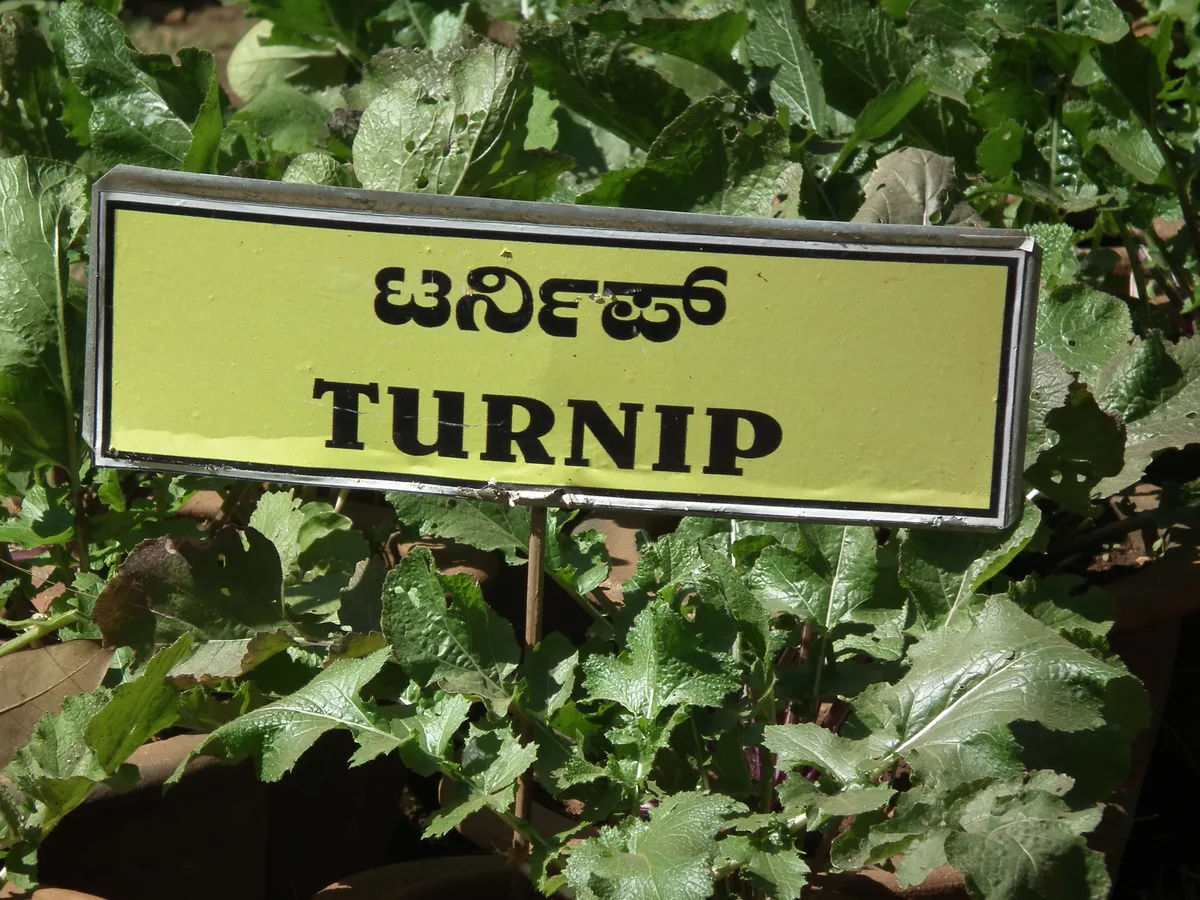
Turnip
Brassica rapa subsp. rapa
Family: Brassicaceae
Turnip grows in full sun and prefers loose, fertile, well-drained loam or sandy loam with good organic matter. Water needs: Moderate; keep soil evenly moist to support tender roots and steady leafy growth while avoiding prolonged waterlogging.
Photo Gallery
Plant reference images showing growth stages and identifying features.
Photo info
Photo info
How to Grow Turnip
Turnip growing information includes sunlight requirements of Full sun, soil conditions listed as Loose, fertile, well-drained loam or sandy loam with good organic matter with a soil pH of 6.0-7.0, and Moderate; keep soil evenly moist to support tender roots and steady leafy growth while avoiding prolonged waterlogging water needs. The listed hardiness zones are 2-11 as an annual crop. For propagation reference, the database lists germination or establishment information for Turnip as Typically 5-14 days from seed when conditions are suitable, with planting or establishment depth listed as About 1/4-1 inch depending on seed size. Days to maturity are listed as Typically 45-120 days depending on cultivar and growing conditions.
Plant Overview
Turnip (Brassica rapa subsp. rapa) is listed in the Brassicaceae family and categorized as a vegetable with a biennial commonly grown as an annual crop life cycle. This profile summarizes growing information for hardiness, light, soil, water, seed starting, maturity, and other available cultivation details. Difficulty is listed as Easy.
- Plant ID
- PLT-0032
- Family
- Brassicaceae
- Plant type
- Vegetable
- Life cycle
- Biennial commonly grown as an annual crop
- Growth habit
- Cool-season herbaceous biennial commonly grown as an annual for its swollen root and edible leaves
- Mature height
- Commonly about 12-18 inches tall when grown for roots and greens
- Mature spread
- Commonly about 6-12 inches wide
- Difficulty
- Easy
Growing Conditions
Turnip is listed for full sun conditions. Water needs are listed as moderate; keep soil evenly moist to support tender roots and steady leafy growth while avoiding prolonged waterlogging. The database soil reference is Loose, fertile, well-drained loam or sandy loam with good organic matter. The listed soil pH range is 6.0-7.0, and the listed hardiness range is 2-11 as an annual crop.
- Hardiness zones
- 2-11 as an annual crop
- Sunlight
- Full sun
- Soil
- Loose, fertile, well-drained loam or sandy loam with good organic matter
- Soil pH
- 6.0-7.0
- Water needs
- Moderate; keep soil evenly moist to support tender roots and steady leafy growth while avoiding prolonged waterlogging
- Plant spacing
- Thin plants to roughly 2-4 inches apart for roots, with rows about 12-18 inches apart
Seed & Germination
For seed starting, the listed germination time is Typically 5-14 days from seed when conditions are suitable and the seed depth is About 1/4-1 inch depending on seed size. The listed time to maturity is Typically 45-120 days depending on cultivar and growing conditions. Use these values as general reference points and adjust for local climate, seed source, and growing conditions.
- Germination
- Typically 5-14 days from seed when conditions are suitable
- Germination temperature
- Turnip seed germinates well in cool soil, with strong germination commonly occurring around 50-75°F
- Seed depth
- About 1/4-1 inch depending on seed size
- Sowing method
- Direct sow turnip seed where plants will mature, then thin seedlings after emergence to the desired spacing; succession sowings can extend the harvest season
- Start indoors
- Optional for crops that tolerate transplanting; otherwise direct sow
- Transplanting
- Transplant after hardening off when temperatures suit the crop
Harvest & Propagation
- Days to maturity
- Typically 45-120 days depending on cultivar and growing conditions
- Harvest
- Harvest roots when they reach the desired size, commonly about 2-3 inches in diameter for best tenderness; greens can be harvested earlier as needed
- Propagation
- Primarily propagated by seed and usually direct sown where the crop will mature
- Seed saving
- Turnips are biennial and must overwinter or be replanted to flower in their second season; allow seed pods to mature and dry before collecting, and isolate from compatible Brassica rapa crops to reduce cross-pollination
- Pollination
- Turnips are insect-pollinated and can cross with other compatible Brassica rapa crops when allowed to flower
Garden Information
- Common pests
- Flea beetles, aphids, cabbage worms, cabbage loopers, root maggots, cutworms, slugs, and other brassica-feeding insects
- Common diseases
- Clubroot, downy mildew, black rot, damping-off, leaf spots, and root rots
- Uses
- Edible roots and greens for roasting, boiling, soups, stews, mashing, pickling, salads, and other culinary uses
Related Plants
Find, buy, swap, or sell Turnip
One World One Seed connects this plant profile to community sellers, plant swaps, storefronts, and participating garden retailers.
Growing Reference Note
Plant performance can vary with climate, soil, weather, cultivar, seed quality, and gardening methods. The values on this page are general database reference ranges rather than a substitute for local extension guidance or seed-packet instructions.