Growing Dill From Seed
Dill is a fast-growing annual herb grown for its feathery leaves, flowers, and aromatic seeds. It develops a taproot and is usually easiest to grow by direct sowing where the plants will mature. Cool to mild weather supports leafy growth, while heat and maturity eventually encourage flowering and seed production.
.jpg)
.jpg)
Explore the Dill plant profile →
Choose a variety
Choose a Dill Variety
Varieties differ in plant height, leaf production, flowering time, and suitability for containers or seed harvest.
Use Fresh Seed
Good-quality seed helps produce a more even stand and predictable plant characteristics.
Direct sow
Direct Sow When Practical
Dill forms a taproot and often performs best when seeded where it will remain rather than transplanted after becoming large.
Use Loose Well-Drained Soil
Prepare a seedbed that allows roots to grow downward without remaining in saturated conditions.
Follow Packet Depth Guidance
Sow at the recommended depth and avoid burying seed more deeply than necessary.
Keep the Seed Zone Moist
Maintain steady moisture through germination, especially near the surface where newly sown seed can dry quickly.
Thin Crowded Seedlings
Give plants enough room for foliage, roots, and airflow rather than maintaining a dense mat.
Use Succession Sowing
Small plantings made at intervals can provide fresh foliage over a longer period.
Grow and care
Choose a Sunny Site
Dill generally grows best in strong light, though intense heat can speed flowering.
Protect From Strong Wind
Tall flowering stems can lean or break in exposed sites, so some wind protection may be useful.
Water During Establishment
Young seedlings need dependable moisture while roots are still shallow.
Water Mature Plants as Needed
Once roots are established, avoid allowing severe drought while also preventing continuous saturation.
Use Mulch Carefully
A light mulch can reduce evaporation and weeds once seedlings are large enough not to be buried.
Keep Mulch Away From Seedling Stems
Do not pile heavy wet mulch directly against young dill stems, where it can trap moisture and make inspection difficult.
Control Weeds Early
Young dill can be overtaken by aggressive weeds. Weed carefully around the developing taproots.
Avoid Heavy Transplanting
If dill is started in containers, transplant young plants before the taproot becomes badly restricted.
Containers
Grow Compact Varieties in Containers
Shorter dill varieties are well suited to pots when containers provide enough depth and drainage.
Check Containers Frequently
Potted dill can dry faster than garden soil, especially in full sun and windy conditions.
Harvest leaves
Harvest Leaves While Tender
Cut leafy growth as needed before plants devote most of their energy to flowers and seed.
Do Not Remove Too Much at Once
Leave enough healthy foliage for the plant to continue growing after harvest.
Harvest in the Cooler Part of the Day
Leaves are often less wilted when harvested before intense afternoon heat, particularly during warm weather.
Expect Flowering as Plants Mature
Dill naturally shifts from leaf production into flowering and seed formation as the plant ages.
Allow Flowers for Beneficial Insects
Dill flowers attract many small pollinators and predatory insects when plants are allowed to bloom.
Use Dill as a Host Plant
Some butterfly caterpillars feed on dill foliage. Gardeners may choose to tolerate some feeding in wildlife-friendly plantings.
Protect Young Plants From Heavy Feeding
Small seedlings can be overwhelmed by insects or animals more easily than mature plants.
Flowers and seed
Harvest Flower Heads for Pickling
Flowering stems can be harvested at the appropriate stage for culinary uses that call for dill heads.
Allow Seed to Mature
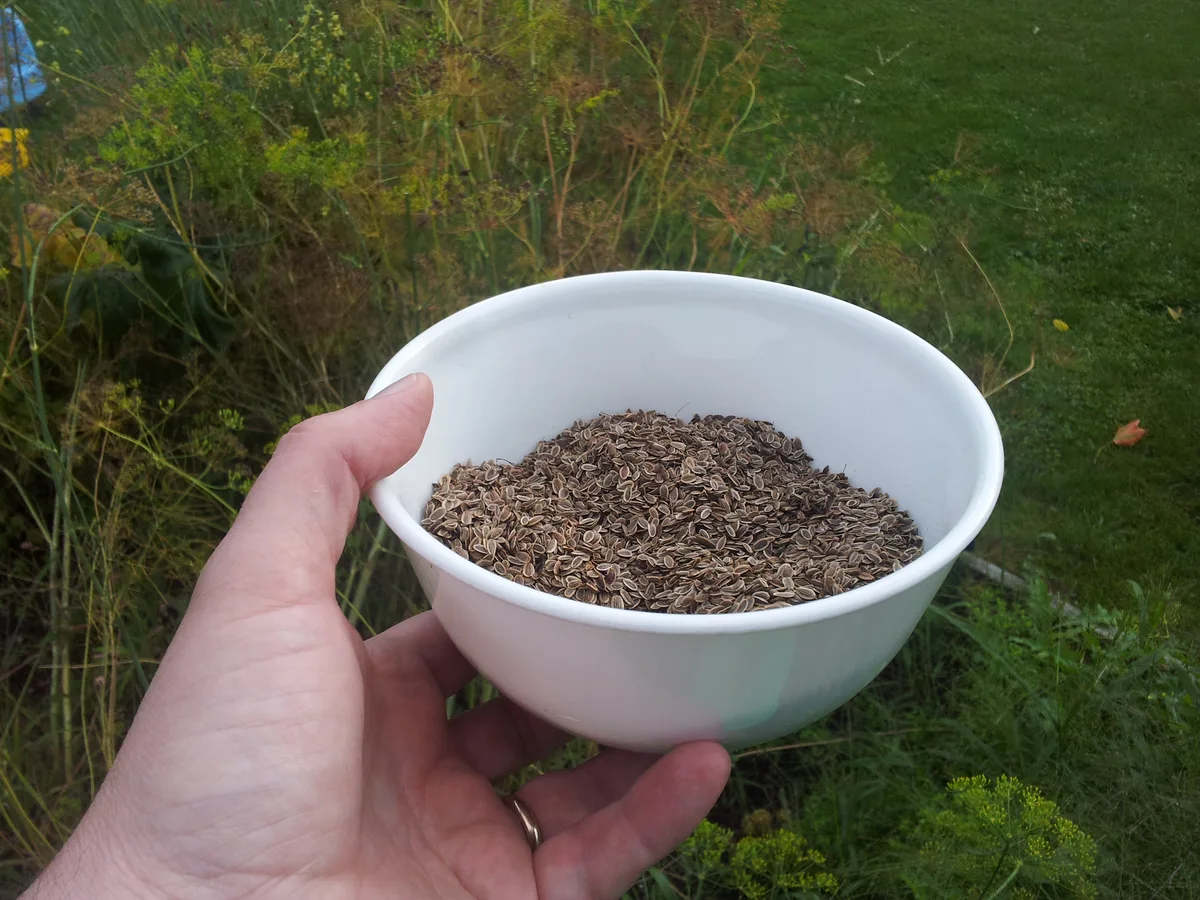
For seed harvest, leave flower heads until seeds develop fully and begin drying.
Harvest Before Excessive Shattering
Mature dill seed can fall easily. Cut heads before too much seed is lost to the ground.
Finish Drying in a Protected Place
Place harvested seed heads where they can dry away from rain and high humidity.
Separate Seed From Plant Debris
Rub or thresh dry heads gently, then remove stems and light chaff before storage.
Store Seed Dry
Seed intended for future planting should be dry before being sealed in a labeled container.
Label Seed by Year and Variety
Good labels make it easier to track germination and distinguish compact, tall, or slow-bolting selections later.
Expect Volunteer Seedlings
Dill commonly reseeds when mature seed falls onto suitable soil and weather becomes favorable.
Keep Seasonal Records
Record when dill begins flowering so future sowings can be timed for longer leafy harvests.
Practical Takeaway
Direct sow dill into loose, well-drained soil, keep young plants evenly moist, sow in succession for continued foliage, and allow selected plants to flower and mature when seed or wildlife value is desired.