Saving Onion Seeds
Onions are biennial seed crops, so saving seed usually takes two growing stages. Plants first form bulbs, then after a period of cold exposure they regrow, flower, and produce seed. Because onions are insect-pollinated and varieties can cross readily, successful seed saving requires careful bulb selection, overwintering, isolation, and harvest timing.
,_2024_(1).jpg)

Explore the Onion plant profile →
On this page
- Understand the Biennial Life Cycle
- Choose an Open-Pollinated Variety
- Expect Hybrid Offspring to Vary
- Select Bulbs Before Seed Production
- Evaluate Bulb Shape
- Evaluate Bulb Color
- Evaluate Storage Quality
- Reject Diseased Bulbs
- Preserve Enough Parent Bulbs
- Overwinter According to Climate
- Protect Stored Bulbs From Rot
- Protect Bulbs From Severe Freezing
- Replant Selected Bulbs
- Maintain Variety Labels
- Expect Tall Flower Stalks
- Support Stalks if Needed
- Understand Onion Pollination
- Isolate Compatible Onion Varieties
- Use Crop-Specific Isolation Guidance
- Use Time Isolation Where Practical
- Watch Nearby Alliums
- Remove Off-Type Plants Before Flowering
- Watch Flower Clusters Develop
- Expect Uneven Seed Maturity
- Watch for Black Mature Seed
- Harvest Before Heavy Seed Loss
- Cut Seed Heads Into Bags
- Finish Drying Under Cover
- Do Not Seal Damp Material
- Thresh Dry Seed Heads
- Separate Chaff
- Dry Cleaned Seed Thoroughly
- Label the Storage Container
- Keep Different Years Separate
- Store Seed Cool and Dry
- Test Older Seed
- Keep Selection Records
- Practical Takeaway
Understand the Biennial Life Cycle
Most onions form bulbs during the first season and flower during the following reproductive season.
Choose an Open-Pollinated Variety
Open-pollinated onions are generally the best choice when the goal is maintaining a variety through saved seed.
Expect Hybrid Offspring to Vary
Seed saved from an F1 hybrid may produce bulbs that differ in shape, color, storage quality, maturity, or size.
Select Bulbs Before Seed Production
Good seed saving starts by choosing first-year bulbs that match the characteristics you want to preserve.
Evaluate Bulb Shape
Select bulbs that fit the expected form of the variety rather than obvious off-types.
Evaluate Bulb Color
Choose bulbs with the desired skin and flesh characteristics when color is an important varietal trait.
Evaluate Storage Quality
If long storage is important, favor sound bulbs that remain healthy through the storage period.
Reject Diseased Bulbs
Avoid using bulbs with rot, severe damage, or obvious disease as seed parents.
Preserve Enough Parent Bulbs
Onions are cross-pollinated, so using multiple healthy parents helps preserve genetic diversity.
Overwinter According to Climate
In some regions bulbs can remain in the ground, while colder or wetter conditions may require lifting and protected storage.
Protect Stored Bulbs From Rot
Storage should keep bulbs alive without trapping excessive moisture.
Protect Bulbs From Severe Freezing
Bulbs held for seed should survive the winter rather than being exposed to damaging conditions.
Replant Selected Bulbs
Set chosen bulbs back into the garden when seasonal conditions are appropriate.
Maintain Variety Labels
Keep durable labels with each group of seed bulbs from storage through flowering.
Expect Tall Flower Stalks
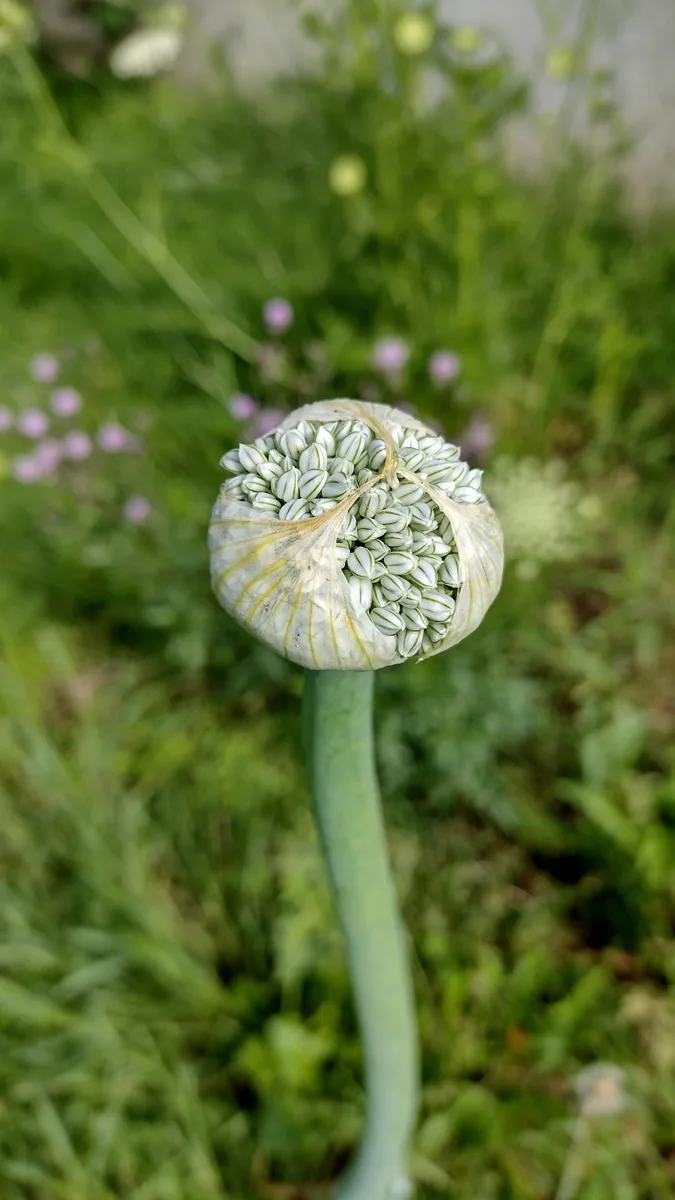
Seed-stage onions produce upright stalks topped with round clusters of flowers.
Support Stalks if Needed
Flower stalks can lodge in wind or storms and may benefit from support in exposed sites.
Understand Onion Pollination
Onion flowers attract many insects that move pollen among plants.
Isolate Compatible Onion Varieties
Different onion varieties flowering together can cross readily.
Use Crop-Specific Isolation Guidance
Distance requirements depend on desired purity, local pollinator activity, and seed-saving goals.
Use Time Isolation Where Practical
Varieties that flower at different times have fewer opportunities to exchange pollen.
Watch Nearby Alliums
Know which related cultivated or volunteer onions are flowering nearby when maintaining seed purity.
Remove Off-Type Plants Before Flowering
Plants that clearly differ from the intended variety should not contribute pollen to the seed population.
Watch Flower Clusters Develop
After pollination, seed capsules form across the rounded flower head.
Expect Uneven Seed Maturity
Not every capsule on an umbel ripens at exactly the same time.
Watch for Black Mature Seed
Ripe onion seed becomes dark and visible as capsules dry and begin opening.
Harvest Before Heavy Seed Loss
Fully mature capsules can release seed quickly in wind or rain.
Cut Seed Heads Into Bags
Place mature umbels directly into paper bags or other containers to catch loose seed.
Finish Drying Under Cover
Allow harvested flower heads to dry in a protected, ventilated location.
Do Not Seal Damp Material
Trapped moisture can cause mold and reduce seed quality.
Thresh Dry Seed Heads
Rub or shake mature umbels to release the black seed.
Separate Chaff
Use screens, hand sorting, or gentle winnowing to remove dry flower material.
Dry Cleaned Seed Thoroughly
Ensure seed is fully dry before final storage.
Label the Storage Container
Record variety, harvest year, source, and isolation method.
Keep Different Years Separate
Separate seed lots make age and germination performance easier to track.
Store Seed Cool and Dry
Stable low-humidity conditions help preserve onion seed viability.
Test Older Seed
A germination test can show whether stored onion seed remains useful.
Keep Selection Records
Document bulb size, shape, color, storage quality, maturity, and disease response.
Practical Takeaway
Save onion seed by selecting sound true-to-type bulbs, overwintering them successfully, replanting enough parents, isolating compatible varieties, harvesting mature seed heads before heavy shattering, and storing fully dry labeled seed.