Growing Zucchini From Seed
Zucchini is a fast-growing warm-season squash that can produce heavily from only a few plants. It is usually direct sown after the soil warms or started indoors shortly before transplanting. Strong sunlight, fertile soil, steady moisture, dependable pollination, and frequent harvest are the main factors behind productive plants.

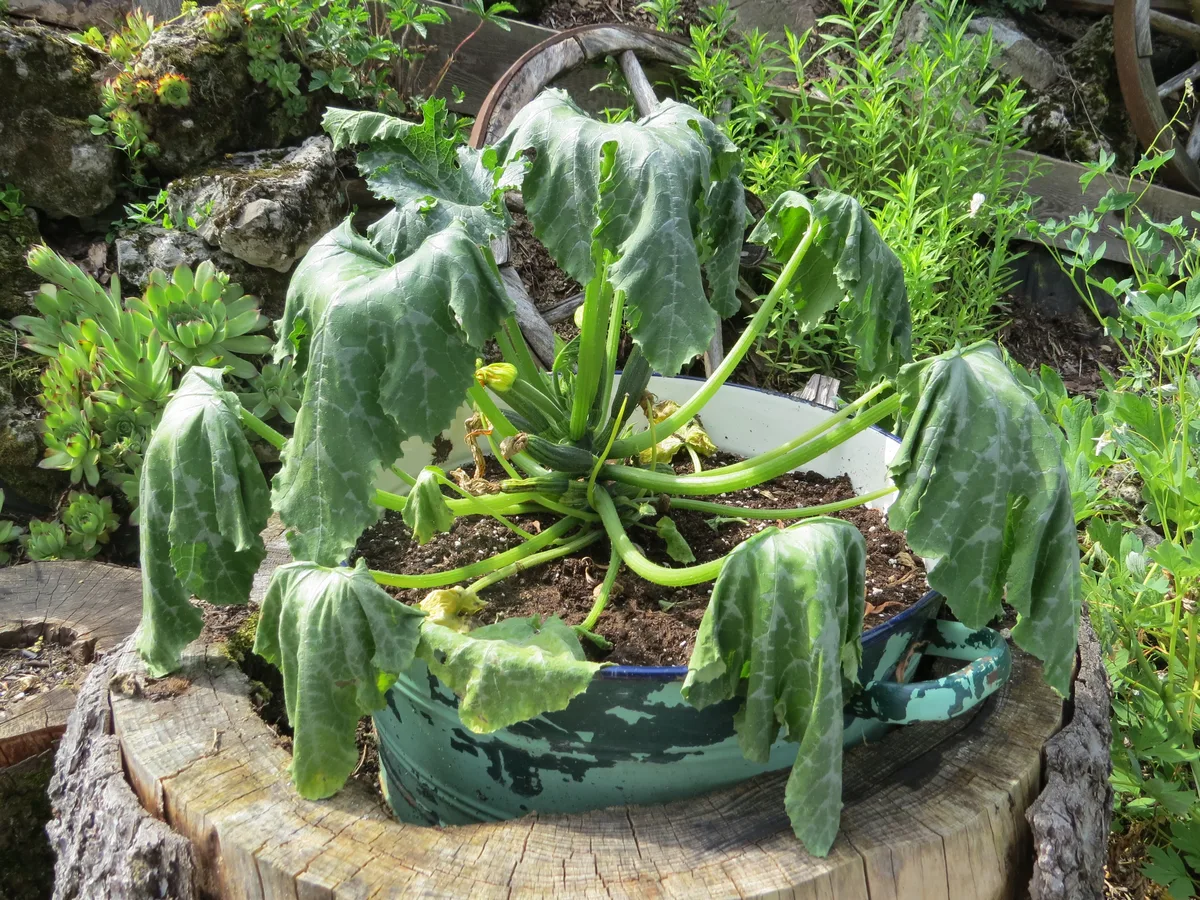
_Hanging_leaves_of_Cucurbita_pepo_subsp._pepo_Zucchini_(zucchini)_at_Bichlh%C3%A4usl,_Tiefgrabenrotte,_Frankenfels,_Austria.jpg)
Explore the Zucchini plant profile →
On this page
Choose a zucchini
Choose a Zucchini Variety
Varieties differ in fruit color, plant habit, disease resistance, productivity, and how much garden space they require.
Understand Bush Growth
Most zucchini plants are compact compared with vining winter squash, but mature leaves can still spread widely.
Sow seeds
Direct Sow in Warm Soil
Zucchini seed germinates quickly when conditions are warm and is commonly planted directly where plants will mature.
Start Indoors if Useful
In short seasons, seedlings can be started shortly before transplanting, but avoid keeping them root-bound.
Use Individual Containers
Separate pots or cells reduce root disturbance when moving young plants outside.
Use a Well-Drained Starting Mix
A light medium maintains moisture without keeping young roots saturated.
Sow at Packet Depth
Follow the variety's planting instructions rather than assuming all squash seed should be planted identically.
Keep the Seed Zone Moist
Maintain moisture during germination without leaving the growing mix waterlogged.
Provide Strong Light After Emergence
Indoor seedlings need bright light because squash can stretch rapidly under weak conditions.
Plant outside
Harden Off Before Transplanting
Gradually expose seedlings to outdoor sunlight, wind, and temperature changes.
Transplant Carefully
Handle the root ball gently because cucurbits can be sensitive to root disturbance.
Choose Full Sun
Zucchini generally grows and fruits best with strong direct light.
Allow Enough Plant Space
Mature leaves can become large, so avoid crowding plants tightly together.
Use Fertile Well-Drained Soil
Fast-growing zucchini performs best in productive soil that also allows excess water to drain.
Use Soil Testing When Needed
A soil test can guide nutrient and pH decisions rather than relying on excessive fertilizer.
Care for plants
Water Consistently
Rapid growth and fruit production require dependable moisture, particularly during dry weather.
Water the Root Zone
Apply water near the soil when practical rather than repeatedly wetting large leaves.
Avoid Waterlogged Soil
Roots still need air even though zucchini uses substantial water.
Use Mulch After Establishment
Mulch can conserve moisture, reduce weeds, and limit soil splash onto leaves and fruit.
Control Weeds Early
Remove weeds before large squash leaves make access difficult.
Watch for Squash Bugs
Inspect leaves and stems regularly for adults, young insects, and egg clusters.
Watch for Squash Vine Borers Where Present
Sudden wilting and stem damage near the base can indicate vine borer activity in regions where the pest occurs.
Watch for Cucumber Beetles
Beetles can chew leaves and flowers and may spread disease in susceptible cucurbit crops.
Watch for Powdery Mildew
White powdery growth often develops on older zucchini leaves under favorable conditions.
Maintain Airflow
Avoid crowding neighboring plants tightly around the zucchini canopy.
Flowers and pollination
Understand Male and Female Flowers
Male flowers grow on slender stems, while female flowers have a small immature zucchini behind the blossom.
Expect Male Flowers First
Early flowering may consist mainly of male blooms, so lack of immediate fruit is not always a problem.
Support Pollinator Activity
Bees and other insects transfer pollen between male and female flowers and are essential for normal fruit development.
Hand Pollinate if Necessary
If female flowers repeatedly fail to develop and pollinator activity is poor, pollen can be transferred manually.
Recognize Poor Pollination
A small fruit that begins growing and then yellows or shrivels may not have been pollinated adequately.
Harvest and later care
Harvest Frequently
Zucchini fruit enlarges quickly, so check productive plants often.
Pick Fruit While Tender
Most varieties are best harvested before fruit becomes oversized with hard rind and mature seeds.
Use Clean Cutting Tools
Cut fruit from the plant rather than twisting hard enough to damage stems.
Handle Leaves Carefully
Large zucchini stems and leaves can be prickly and brittle, so move through the plant carefully during harvest.
Remove Oversized Fruit if Needed
Removing mature fruit can make harvesting easier and allows the plant to continue directing resources toward younger fruit.
Grow Zucchini in Large Containers
Compact varieties can grow in containers with substantial root volume, strong light, drainage, and frequent watering.
Check Containers Often
Large squash leaves can use water rapidly, especially during hot and windy weather.
Save Seed From Mature Fruit
Seed-saving fruit must mature much longer than zucchini harvested for eating.
Expect Cross-Pollination
Zucchini can cross with compatible varieties of the same squash species flowering nearby.
Practical Takeaway
Grow zucchini in warm sunny conditions with fertile well-drained soil, steady moisture, good pollinator access, and enough space for large leaves. Inspect plants often and harvest tender fruit frequently before it becomes oversized.