Growing Tomatoes From Seed
Starting tomatoes from seed gives gardeners access to a much wider variety selection than buying transplants alone. Tomato seedlings need warm germination conditions, strong light after emergence, careful watering, enough root space, gradual hardening before outdoor planting, and steady support as they mature. Starting healthy seedlings makes the transition into the garden much easier.
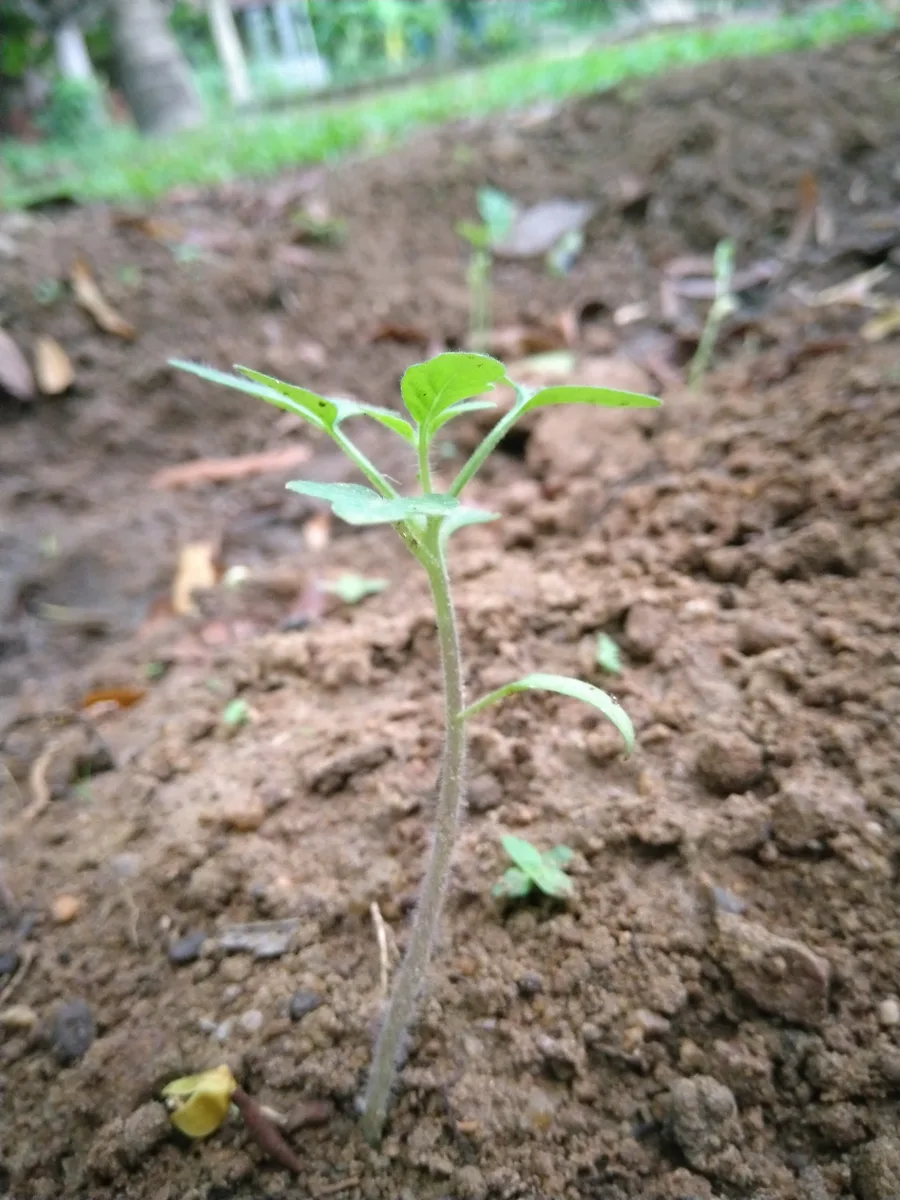

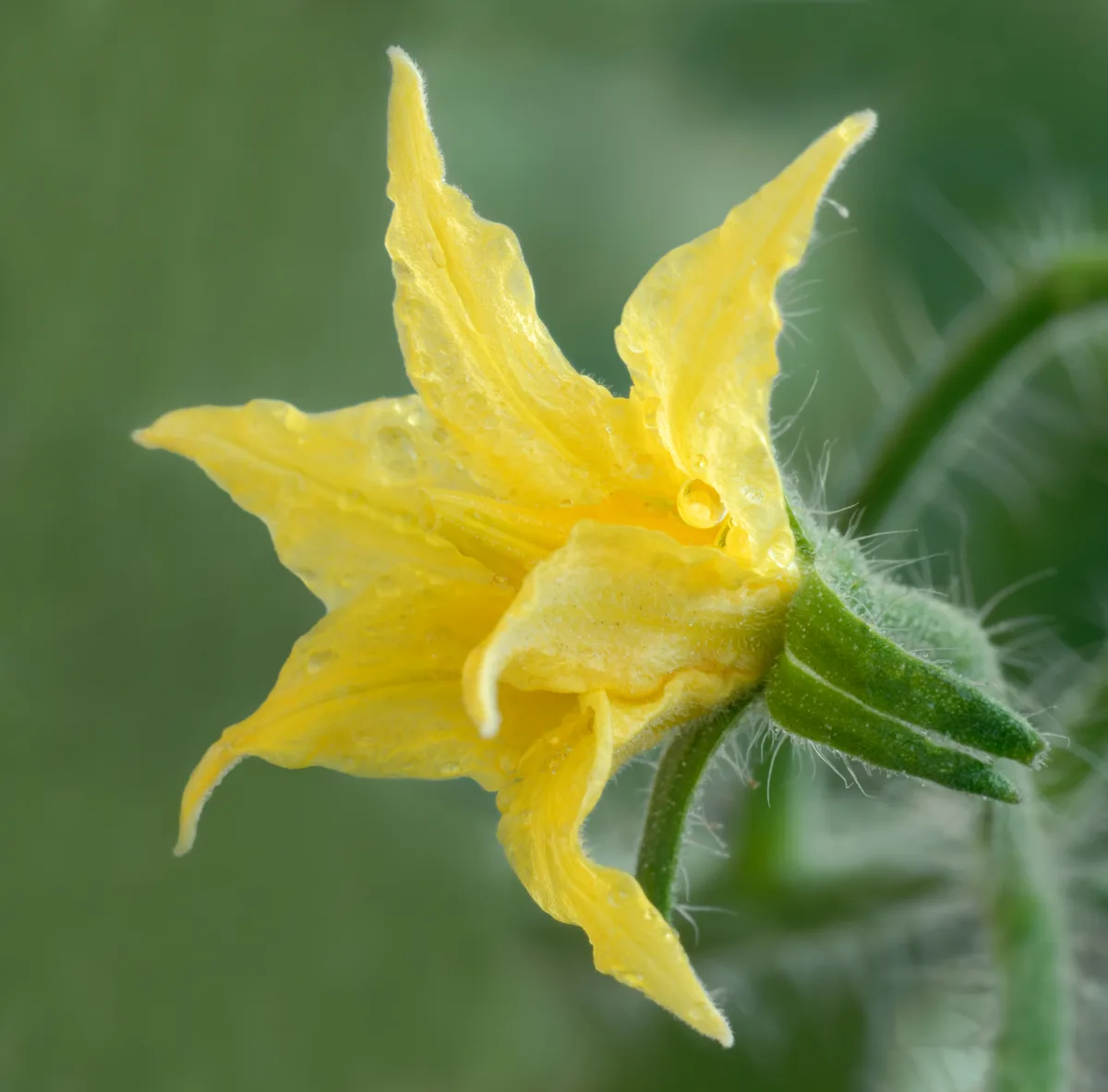

Explore the Tomato plant profile →
On this page
Choose a tomato type
Choose a Tomato Type
Tomatoes vary in fruit size, color, growth habit, maturity, disease resistance, and intended use.
Understand Determinate Tomatoes
Determinate varieties tend to grow to a more limited size and produce much of their crop within a concentrated period.
Understand Indeterminate Tomatoes
Indeterminate varieties continue growing and flowering over a longer season when conditions remain suitable.
Choose Seed for Your Climate
Maturity length and heat or disease tolerance can matter as much as fruit color or size.
Sow seeds
Use Clean Seed-Starting Mix
A loose, well-drained medium supports reliable germination and healthy roots.
Pre-Moisten the Mix
Even moisture before sowing helps prevent dry pockets and seed movement.
Plant at a Shallow Depth
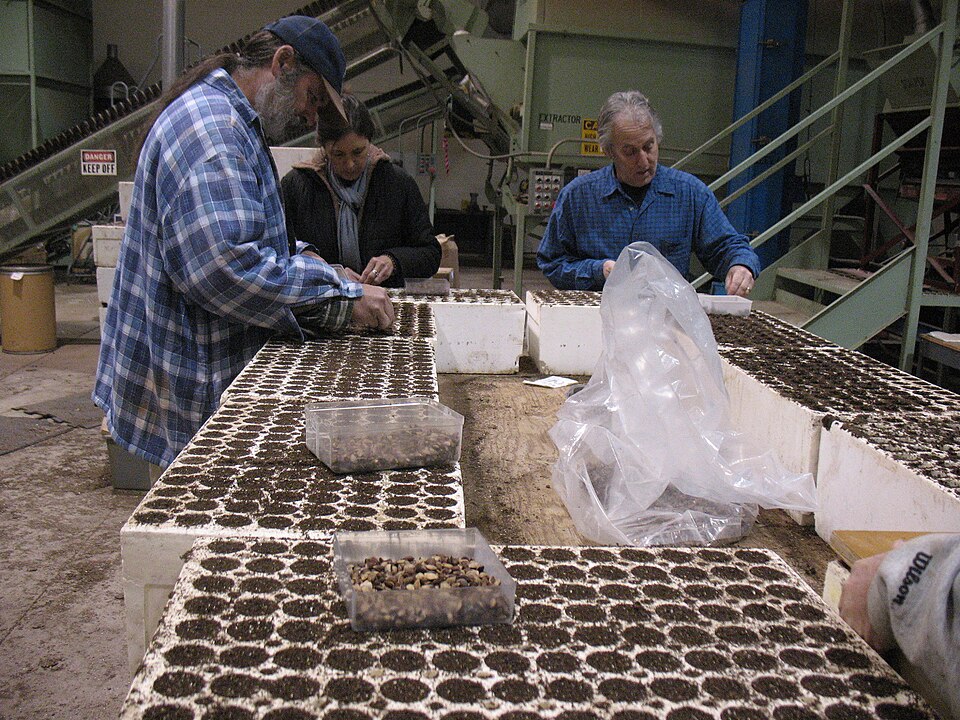
Photo: Pacific Southwest Region 5 · Source · CC BY 2.0 · resized for web
Tomato seed should be covered lightly according to packet guidance rather than buried deeply.
Keep the Medium Warm During Germination
Tomatoes are warm-season plants and germinate more reliably when the seed zone is appropriately warm.
Do Not Overheat the Tray
Very high temperatures can dry the medium quickly and reduce germination quality.
Keep Moisture Consistent
Seeds should not be allowed to dry severely once germination begins.
Avoid Waterlogging
Saturated mix reduces oxygen and can encourage disease.
Expect Germination Before Long
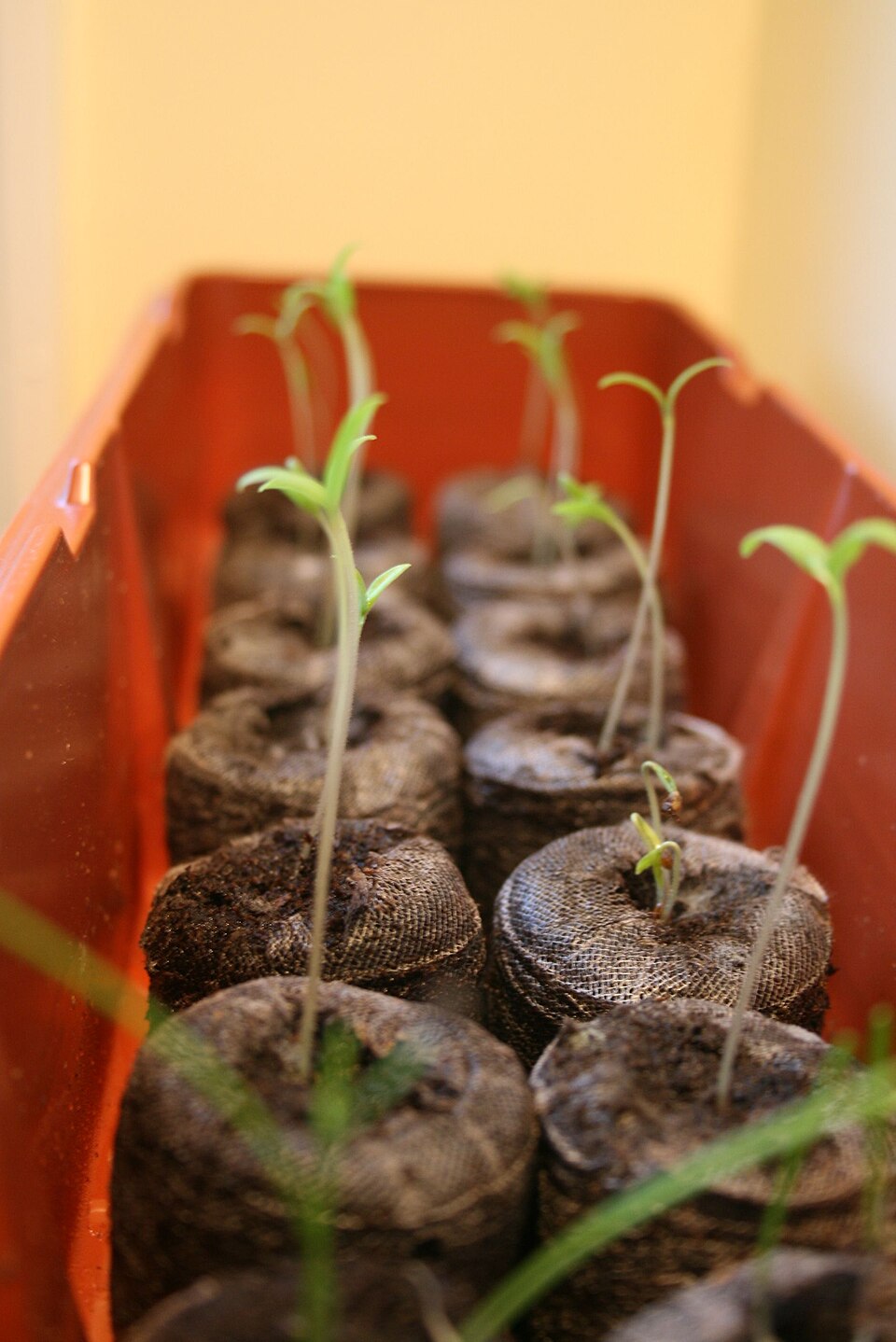
Photo: Cheryl DeWolfe · Source · CC BY 3.0 · resized for web
Fresh tomato seed under suitable conditions usually emerges relatively quickly.
Care for seedlings
Provide Strong Light Immediately
Seedlings stretch rapidly when light is weak or too distant.
Keep Lights Appropriately Positioned
Follow the fixture manufacturer's guidance so seedlings receive enough intensity without overheating.
Provide Gentle Airflow
Air circulation reduces stagnant humidity and can help stems become sturdier.
Do Not Blast Seedlings With Strong Fans
Excessive airflow can dry small cells rapidly.
Watch for Damping-Off
Collapsed stems near the soil line can indicate disease favored by excessive moisture and poor airflow.
Thin Crowded Seedlings
Too many plants in one cell compete for light, nutrients, and root space.
Pot up seedlings
Transplant Seedlings Into Larger Pots
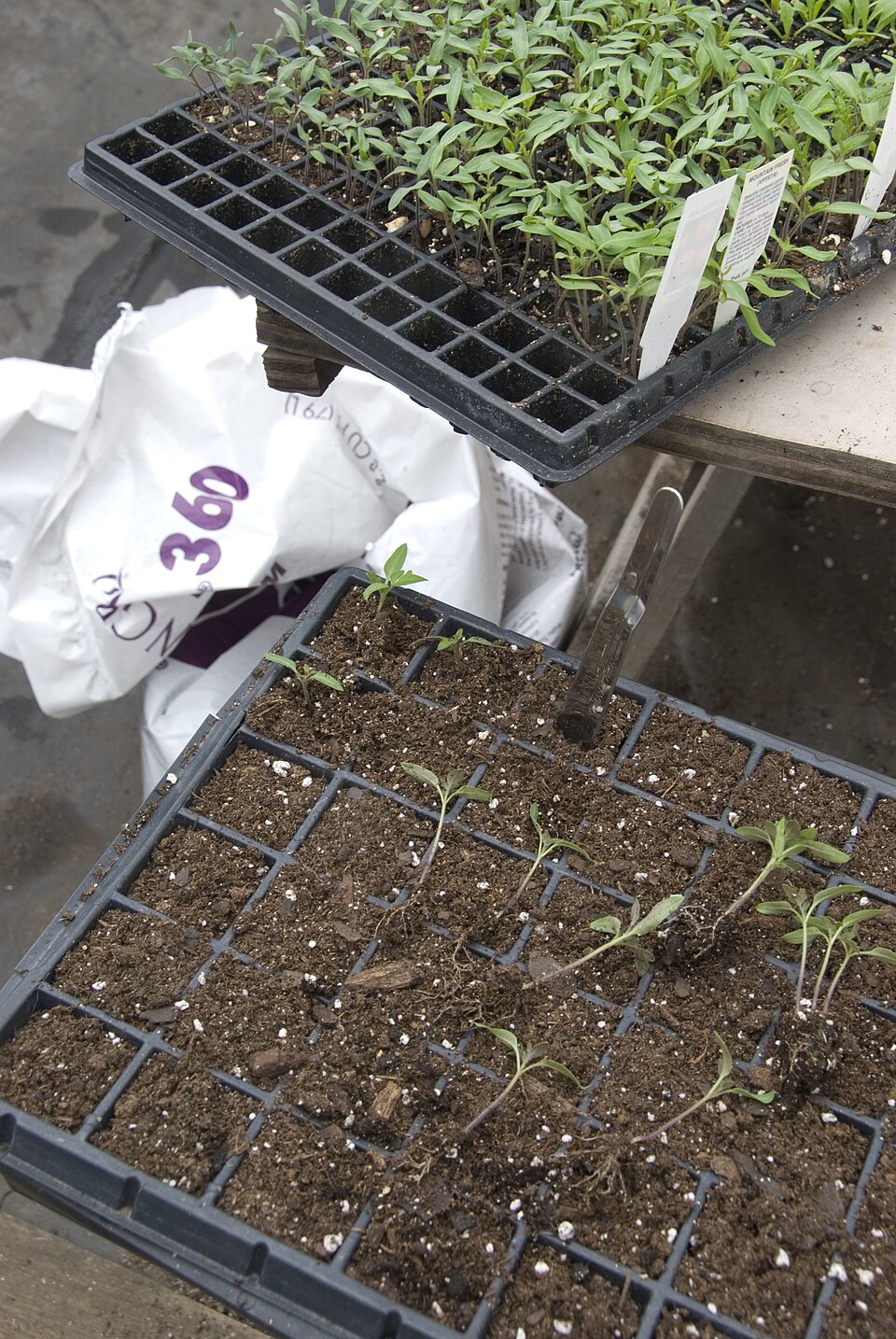
Photo: Dwight Sipler · Source · CC BY 2.0 · resized for web
Once roots and foliage expand, moving seedlings to larger containers supports continued growth.
Handle Seedlings by Leaves When Practical
Damaging a leaf is usually less serious than crushing the main stem.
Tomatoes Can Be Planted Deeper
Unlike many garden crops, tomato stems can form additional roots when buried under suitable conditions.
Do Not Bury Diseased Tissue
Only healthy stems should be used when taking advantage of deeper planting.
Use Potting Mix After Potting Up
Established seedlings benefit from a medium designed for longer-term root growth.
Begin Feeding When Needed
Seedlings may require mild supplemental fertility once stored seed energy and starter nutrients are no longer sufficient.
Avoid Overfertilization
Heavy feeding can injure young roots or create excessively soft growth.
Watch for Root Binding
Seedlings left too long in small pots can develop circling or crowded roots.
Pot Up Again if Necessary
Large transplants may need another container size before outdoor planting.
Harden off and plant outside
Harden Off Before Planting Outside
Gradually expose seedlings to outdoor sun, wind, and temperature changes.
Increase Sun Exposure Gradually
Indoor-grown leaves can scorch if moved directly into intense sunlight.
Protect From Cold
Tomatoes are sensitive to frost and prolonged cold conditions.
Choose a Sunny Planting Site
Tomatoes generally need strong light for good flowering and fruit production.
Prepare Well-Drained Soil
Waterlogged ground can reduce root health and increase disease pressure.
Use Compost Appropriately
Well-finished compost can improve soil structure and nutrient-holding capacity.
Space Plants Adequately
Good spacing improves airflow and makes pruning, harvesting, and inspection easier.
Install Support Early
Cages, stakes, or trellises are easier to place before plants become large and tangled.
Care for plants
Water Deeply
Moisture should reach the active root zone rather than only wetting the surface.
Keep Moisture Consistent
Large swings between drought and heavy watering can contribute to fruit problems.
Use Mulch
Mulch helps conserve soil moisture and reduces soil splash onto lower foliage.
Keep Mulch Away From the Stem Base
Do not pile wet organic material tightly around the crown.
Watch for Early Blight and Leaf Spots
Remove badly affected lower leaves and use crop-appropriate disease management when needed.
Watch for Hornworms
Large caterpillars can remove significant foliage and are easier to control when found early.
Watch for Aphids and Whiteflies
Inspect new growth and leaf undersides regularly.
Prune According to Growth Habit
Indeterminate tomatoes may be trained and pruned differently from determinate varieties.
Do Not Overprune
Leaves are needed for photosynthesis and can protect fruit from excessive sun exposure.
Harvest and save seed
Harvest at Desired Ripeness
Fruit can be picked when it reaches the color and firmness expected for the variety.
Save Seed From Fully Mature Fruit
Choose ripe fruit from healthy desirable plants when saving seed.
Practical Takeaway
Start tomatoes in warm, evenly moist seed-starting mix, give seedlings strong light and enough root space, harden them gradually, transplant into sunny well-drained soil, provide support early, water consistently, and monitor regularly for pests and disease.