Growing Sweet Corn From Seed
Sweet corn is a warm-season crop usually direct sown in blocks so wind can move pollen efficiently between plants. It needs fertile soil, strong sunlight, consistent moisture, and enough plants flowering together for good ear fill. Variety selection and planting layout are especially important because sweet corn types differ in maturity, sweetness genetics, and pollination compatibility.
.jpg)
Explore the Sweet Corn plant profile →
On this page
Choose a variety
Choose a Sweet Corn Type
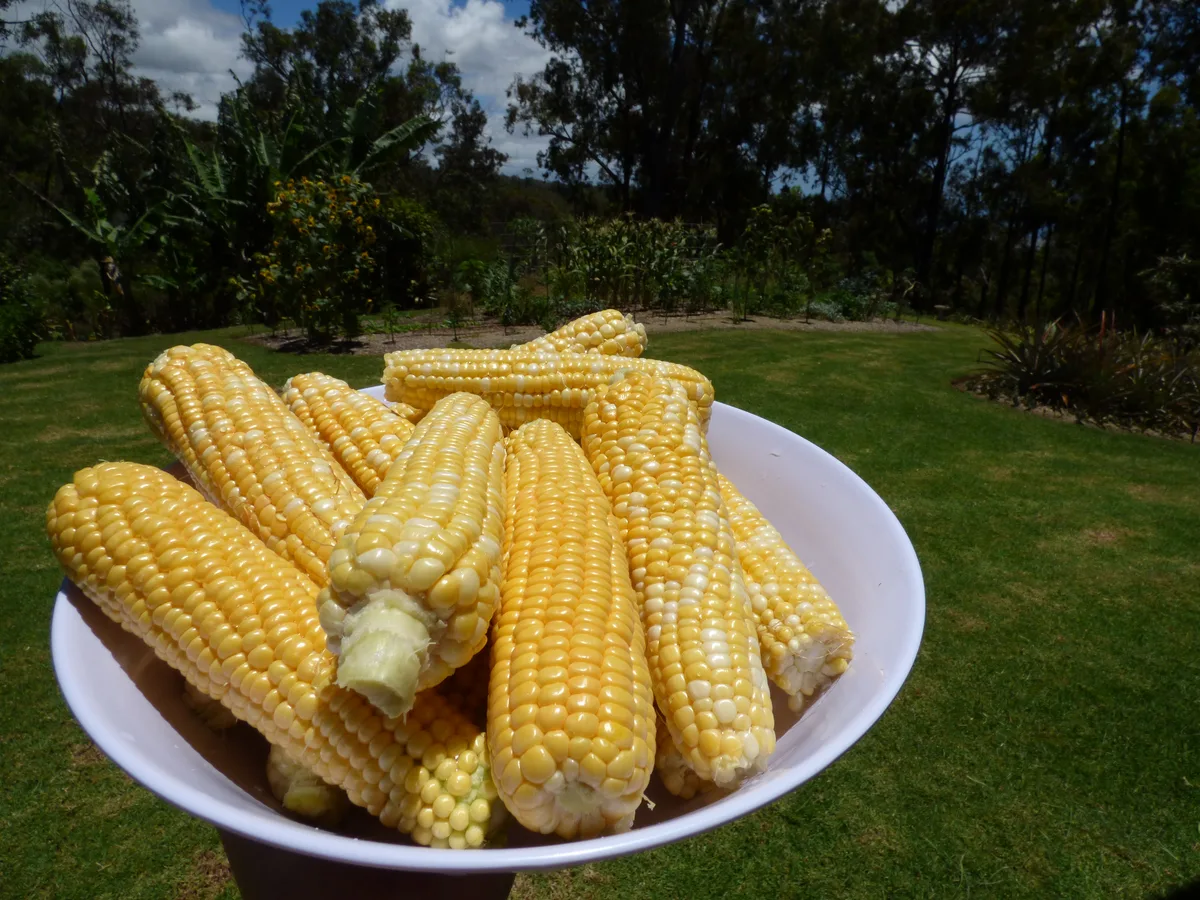
Sweet corn varieties differ in kernel color, sweetness, texture, maturity, and postharvest quality.
Understand Sweetness Genetics
Some sweet corn types need separation from other corn classes to maintain the eating quality expected from the variety.
Read Variety Isolation Guidance
Seed suppliers may recommend separating certain sweet corn types by distance or flowering time.
Choose a Variety That Fits the Season
Early varieties can be useful in short seasons, while later types need more warm weather before harvest.
Sow corn
Direct Sow in Warm Soil
Corn establishes best when planted directly after cold soil conditions have passed.
Avoid Cold Saturated Ground
Seed can rot or emerge poorly when planted into cold wet soil.
Use Fertile Well-Drained Soil
Corn grows rapidly and needs both adequate nutrients and good drainage.
Follow Packet Depth Guidance
Plant seed at the recommended depth for the variety and soil conditions.
Keep the Seed Zone Moist
Maintain moisture during germination without flooding the planting area.
Plant for pollination
Plant in Blocks Rather Than One Long Row
Several shorter neighboring rows generally improve wind pollination compared with a single narrow row.
Grow Enough Plants for Good Pollination
Very small plantings may produce poorly filled ears if pollen does not reach all silks.
Thin Crowded Seedlings
Give plants enough room for roots, leaves, and ear development according to variety guidance.
Choose Full Sun
Sweet corn requires strong light for vigorous growth and good ear production.
Use Soil Testing When Needed
A soil test can guide fertility and pH adjustments rather than relying on guesswork.
Provide Adequate Nitrogen
Corn is a relatively heavy feeder and often needs more nitrogen than many garden crops.
Avoid Excessive Fertilizer
More fertilizer is not always better, and excess nutrients can waste money or damage plants and soil.
Water Consistently
Sweet corn needs dependable moisture throughout active growth.
Prioritize Water Around Tasseling and Silking
Drought stress during pollination can reduce kernel set and ear fill.
Care for plants
Water the Root Zone
Apply water deeply enough to moisten the active root area rather than only wetting the surface.
Use Mulch After Establishment
Mulch can conserve moisture, suppress weeds, and reduce soil temperature swings.
Control Weeds Early
Young corn competes poorly with established weeds during early growth.
Cultivate Shallowly
Avoid deep hoeing close to plants because corn roots spread near the surface.
Watch for Cutworms
Cutworms can sever small seedlings near the soil line.
Watch for Corn Earworms
Ear-feeding caterpillars can damage developing kernels in some regions.
Protect the crop
Watch for Fall Armyworms
Larvae may feed in whorls and ears where this pest is present.
Watch for Animal Damage
Raccoons, birds, deer, and other animals may damage plants or ears near harvest.
Understand Tassels and Silks
Tassels release pollen, while each silk connects to a potential kernel on the ear.
Expect Uneven Silk Emergence
Silks do not always appear at exactly the same time on every plant.
Support Good Pollen Movement
A block planting increases the chance that wind carries pollen from tassels onto nearby silks.
Hand Pollinate Small Plantings if Needed
Gardeners with very small blocks can sometimes shake tassels or transfer pollen manually to improve coverage.
Recognize Poor Pollination
Missing kernels or irregular ear fill can result when some silks do not receive viable pollen.
Use Succession Plantings Carefully
Staggered plantings can extend harvest, but overlapping flowering may complicate isolation between incompatible corn types.
Harvest ears
Check Ears for Harvest Readiness
Harvest timing depends on variety, silk condition, kernel development, and intended eating quality.
Harvest Sweet Corn Promptly
Quality changes after maturity, and some varieties lose tenderness or sweetness faster than others.
Cool Ears After Harvest
Rapid cooling helps preserve eating quality after ears are picked.
Save seed
Save Seed Only From Fully Mature Ears
Seed-saving corn must remain on the plant much longer than sweet corn harvested for eating.
Protect Seed Corn From Cross-Pollination
Corn is wind-pollinated and varieties can cross readily, so meaningful isolation is important for seed purity.
Dry Seed Thoroughly
Allow mature kernels to dry fully before shelling and long-term storage.
Practical Takeaway
Direct sow sweet corn in warm fertile soil, plant several neighboring rows for wind pollination, maintain moisture during tasseling and silking, manage fertility carefully, and isolate varieties appropriately when seed saving or maintaining specialty sweet corn genetics.